Case Study · eBay
Using AI to transform complex workflows into effortless experiences
Impact Highlights
See full breakdown ↓Summary
This project reimagined the listing experience for New and Reactivated Listers (NORLs) by leveraging AI to reduce friction throughout the listing journey.
The goal wasn't simply to speed up listing creation, it was to create an experience that felt intuitive, effortless, and increased seller confidence while improving downstream business outcomes.
The Problem
New and Reactivated Listers faced a listing experience that felt slow, fragmented, and unintuitive. Creating a listing took approximately 5 minutes, with nearly half of that effort concentrated around photos and item details.
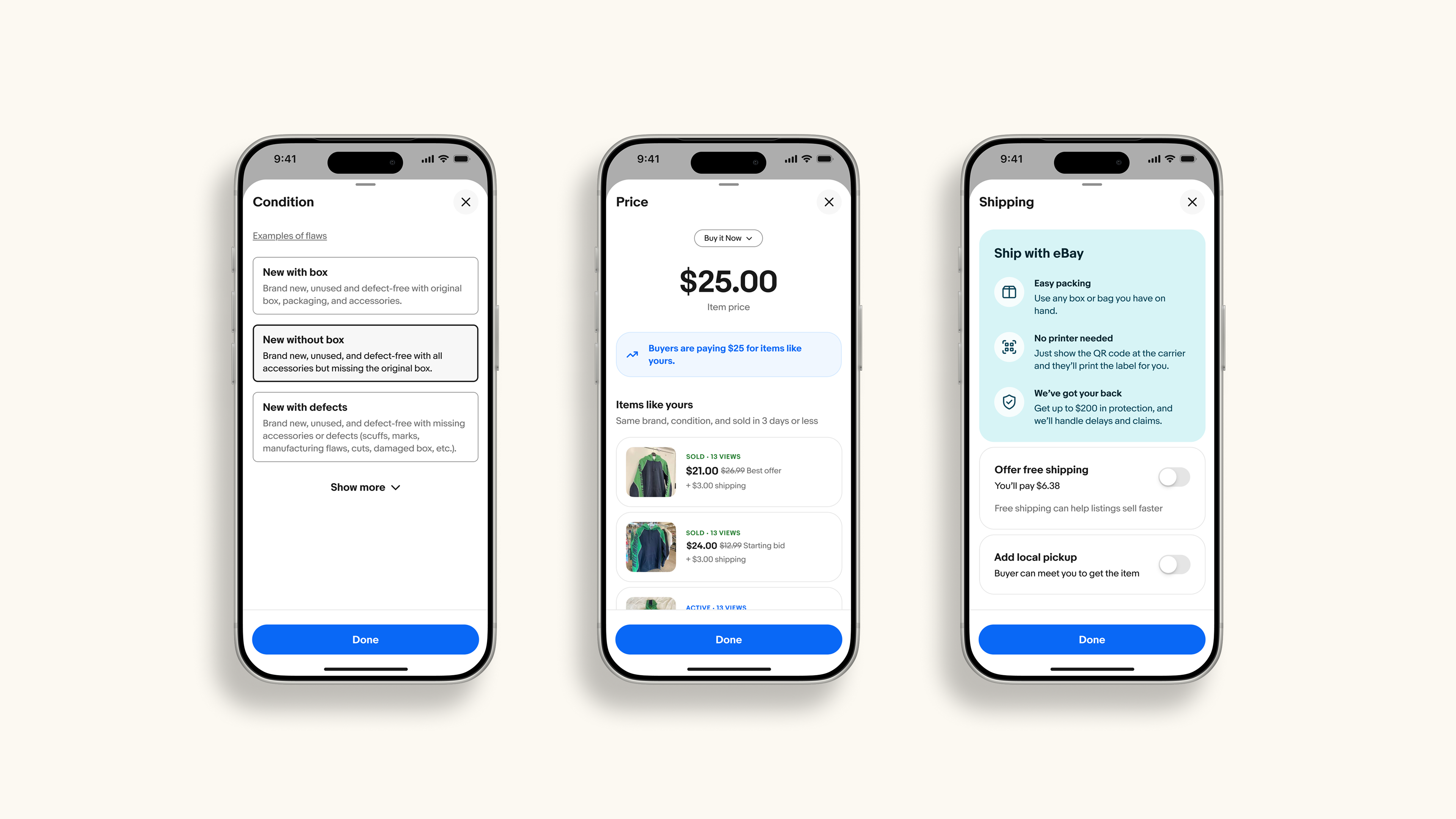
The existing workflow repeatedly interrupted sellers with isolated decisions around pricing, shipping, categories, and item details before they could ever review a complete listing. The process felt more like assembling a form than simply listing an item.
Initial assumptions suggested severe friction, but deeper UXR investigation revealed many users were simply exploring the experience and were not yet ready to list. This reframed our challenge from:
"How do we reduce drop-off?"
to
"How do we create an experience users want to return to when they are ready?"
Why It Mattered
Early seller success strongly influenced long-term marketplace engagement.
Improving the experience represented an opportunity to increase seller confidence, increase listing creation, improve retention, and drive marketplace growth.
Experience Principles
No. 1
Delight wasn't decoration or animation. We defined it as the emotional result of an experience becoming so intuitive and effortless that it exceeded expectations.
No. 2
Completing a listing was only a step toward a larger goal. At decision points we acted as an intelligent partner helping sellers make informed choices.
No. 3
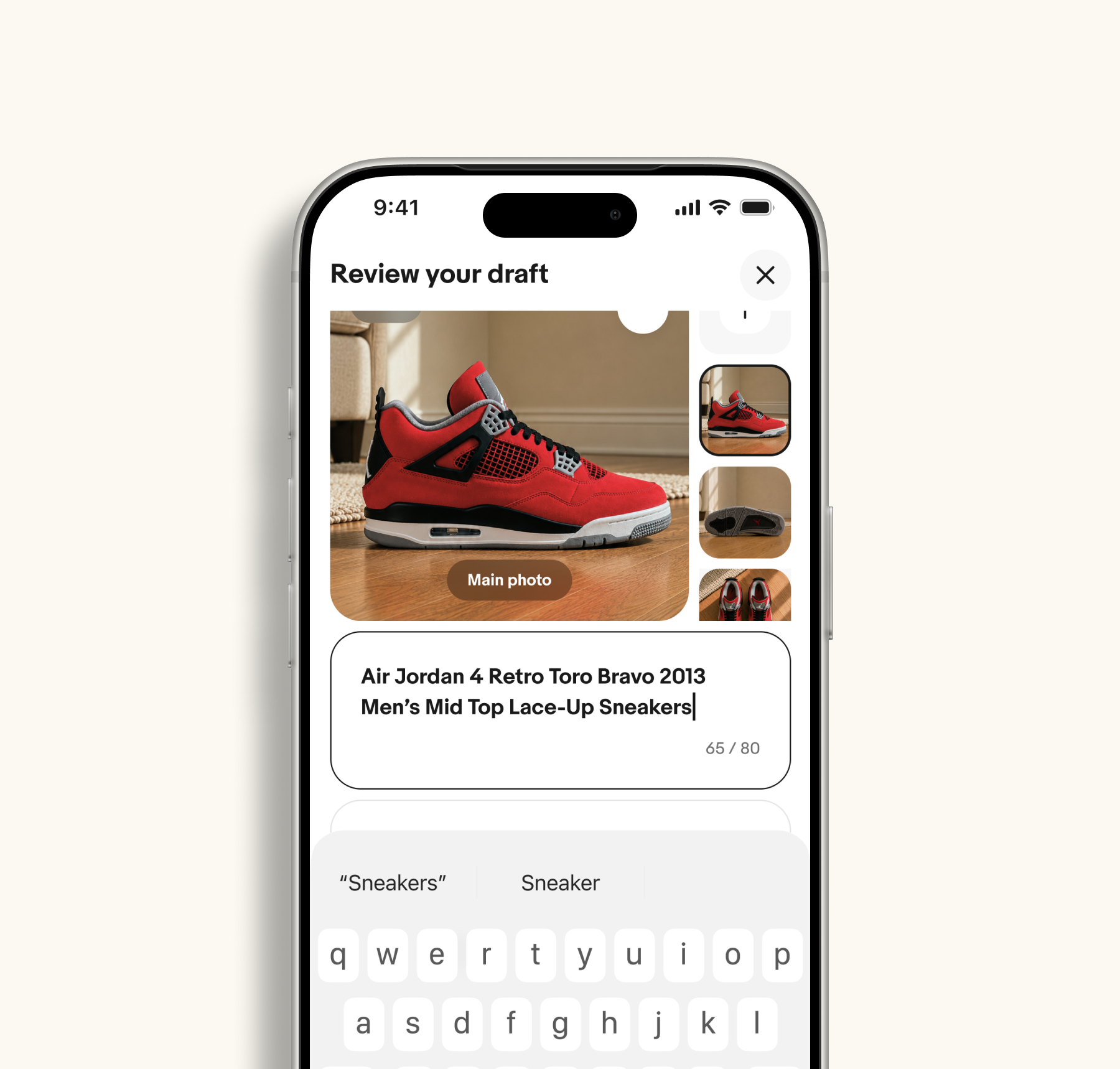
AI should amplify a seller's voice, and not replace it. We aimed to help sellers maintain individuality and connect authentically with buyers.
Constraints
My Role
I led the end-to-end design of the experience and helped define the overall experience strategy.
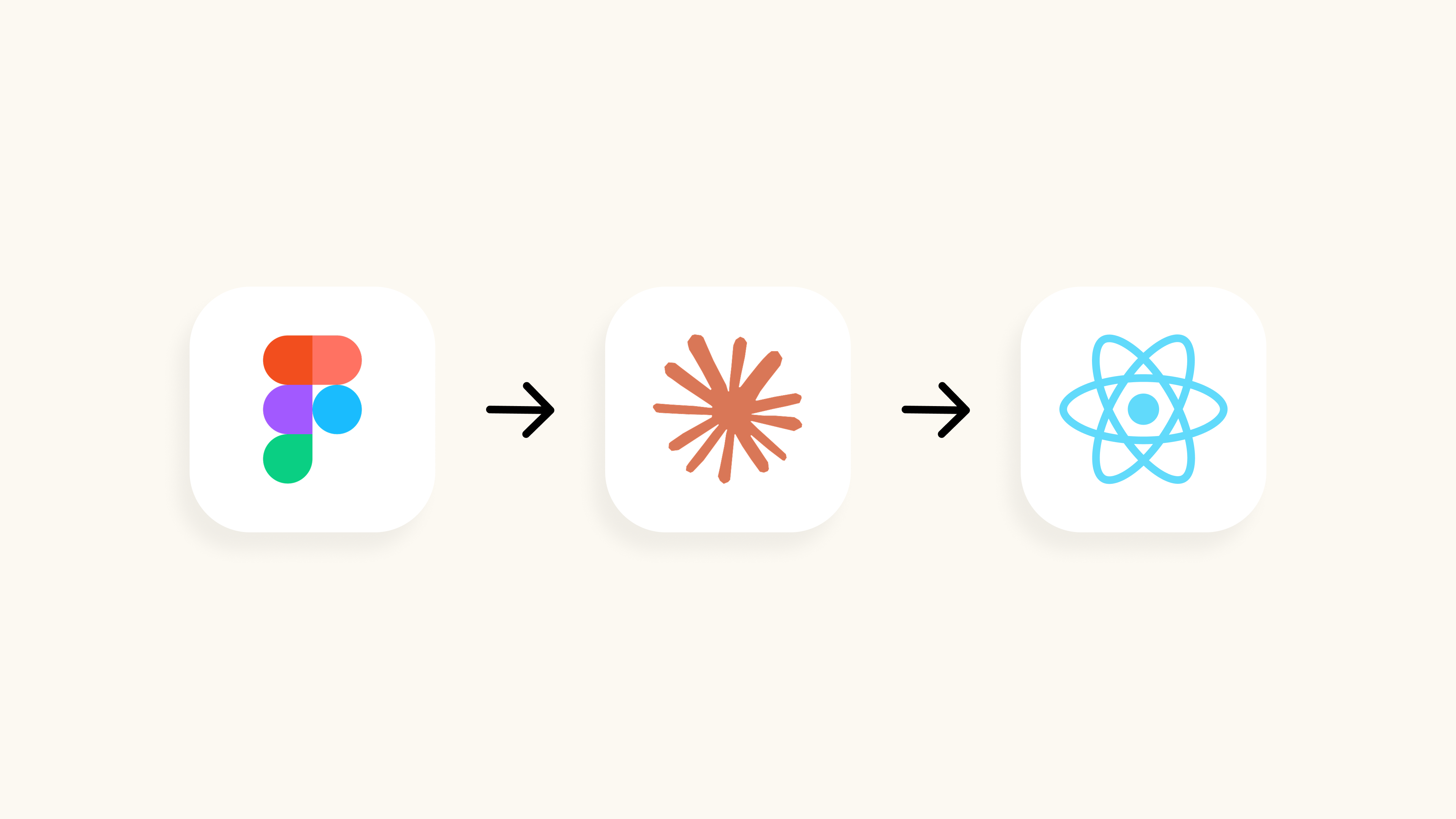
To reduce iteration bottlenecks and rapidly test ideas, I introduced a Claude Code → React Native workflow with my team that enabled faster prototype iteration, live changes during ELT reviews, faster concept validation, and broader experimentation.
Key Decisions
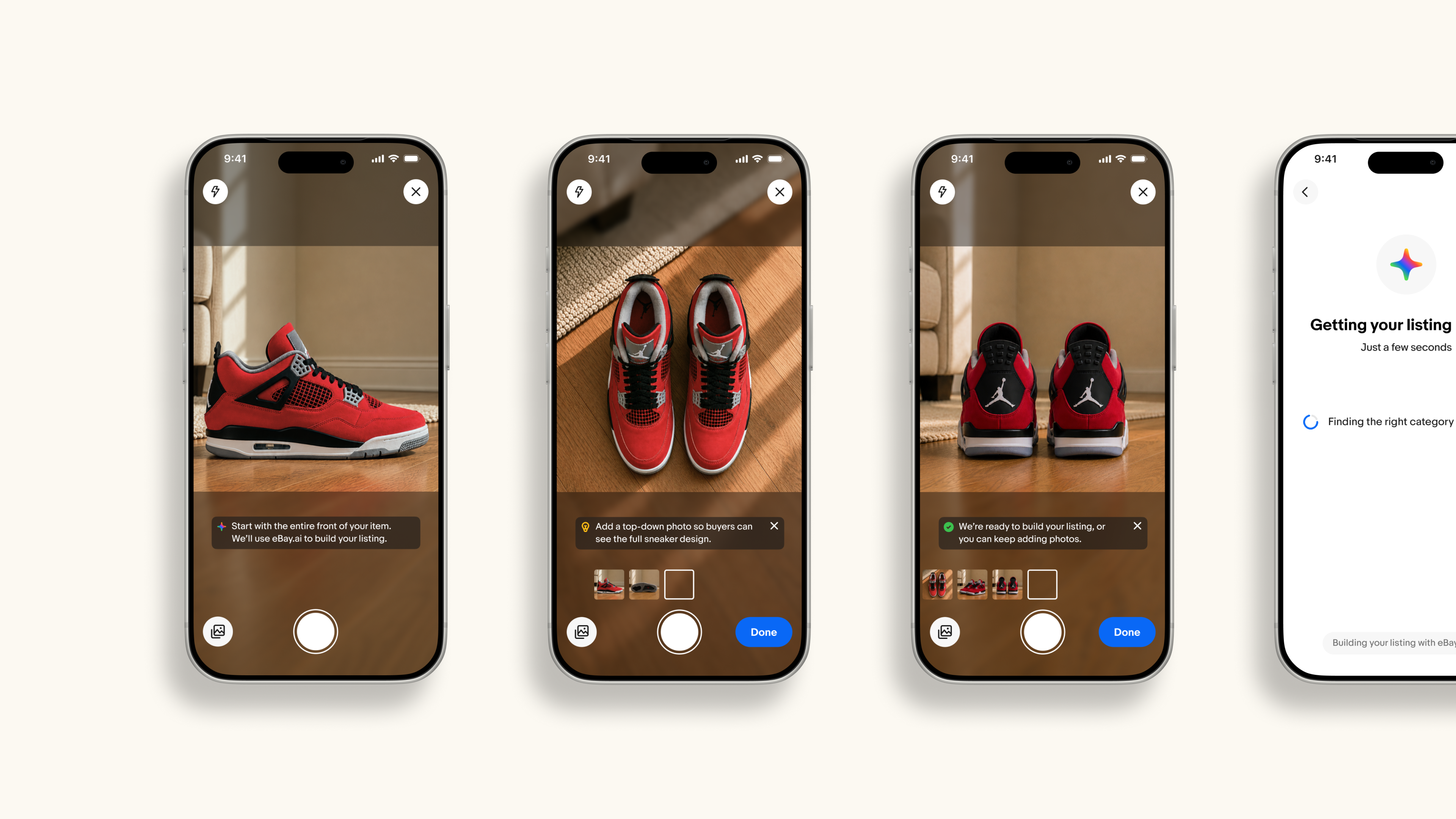
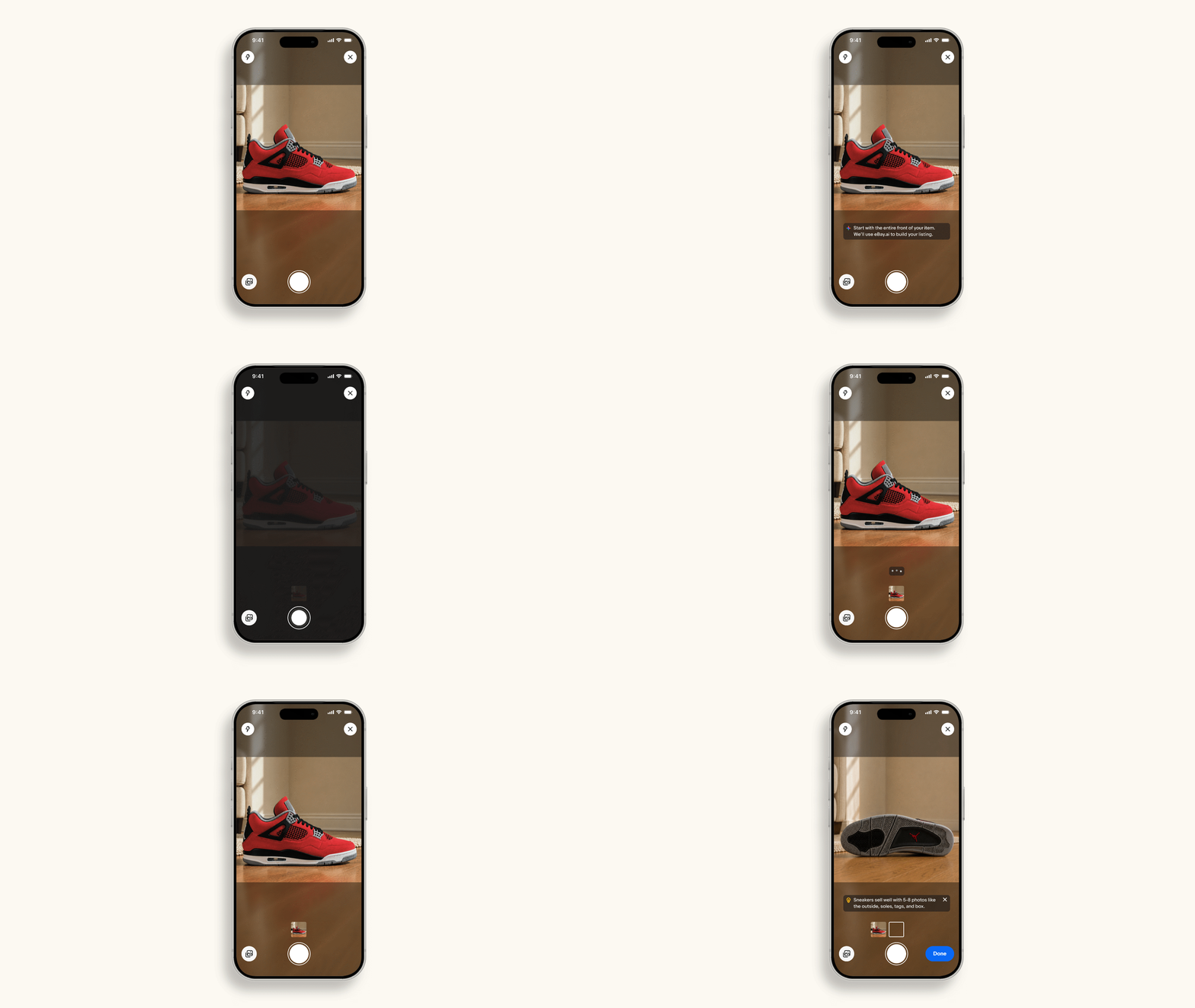
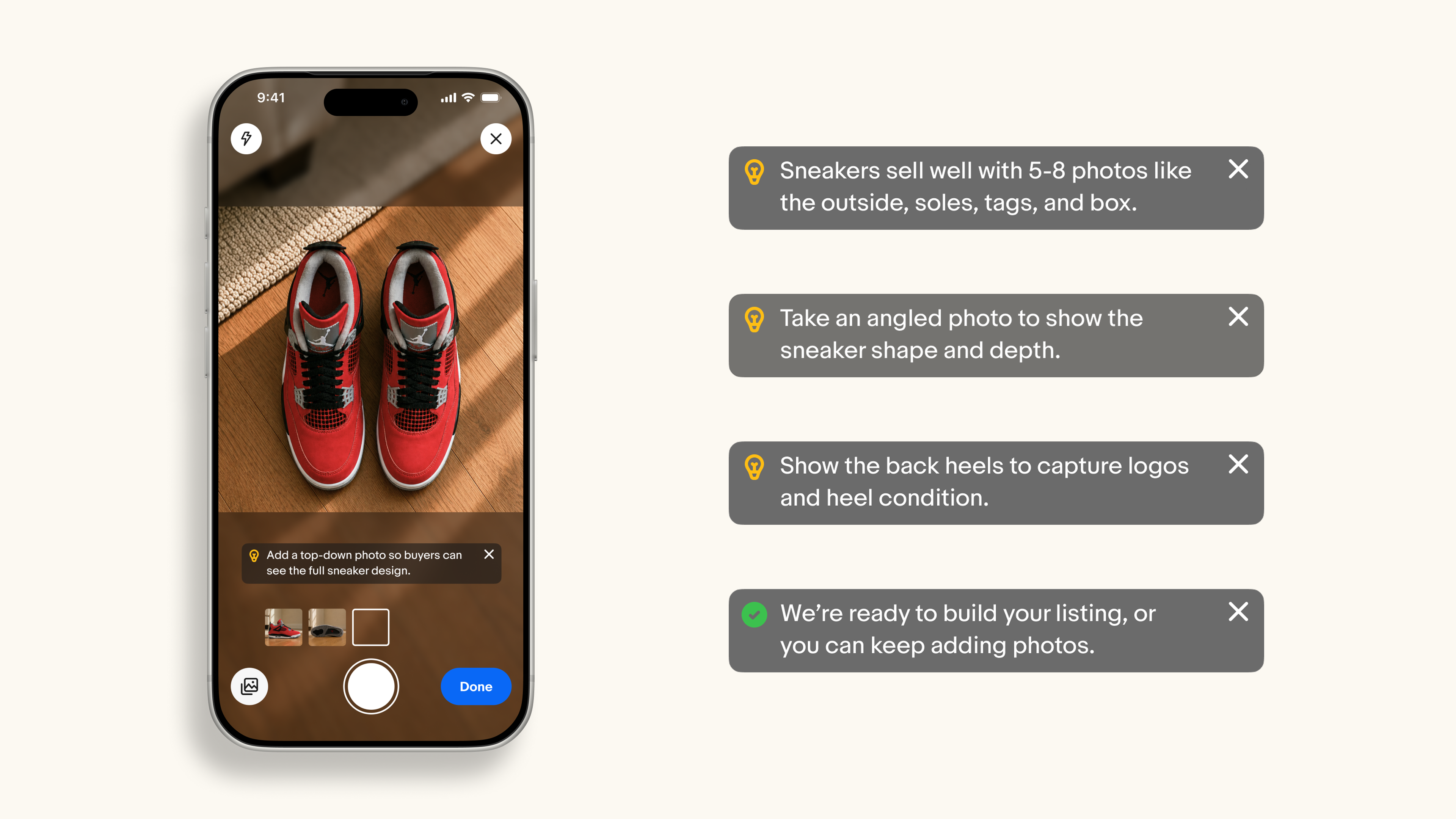
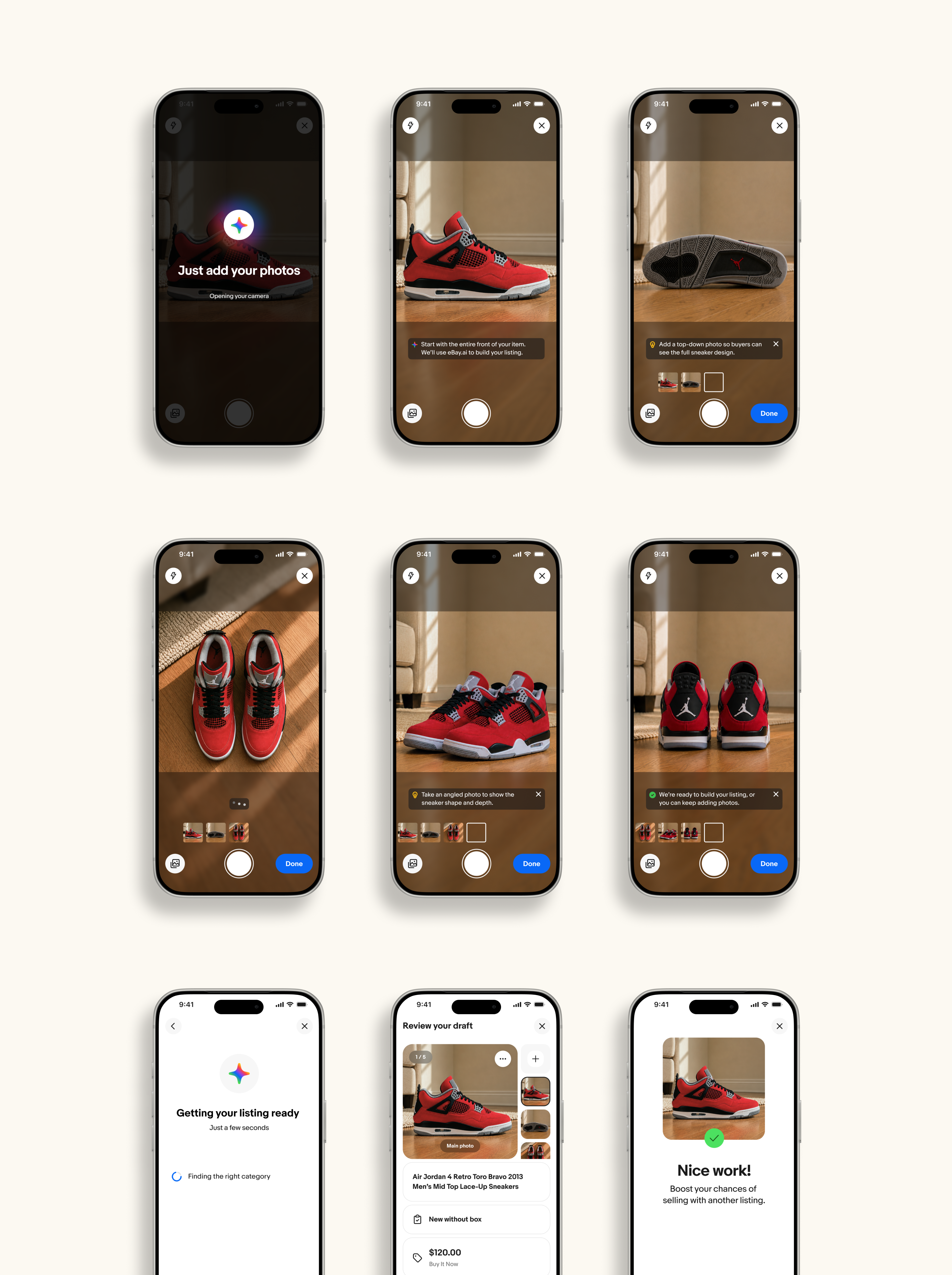
Existing mobile behavior heavily favored the gallery. We bet that a camera-first flow would change how sellers start a listing.
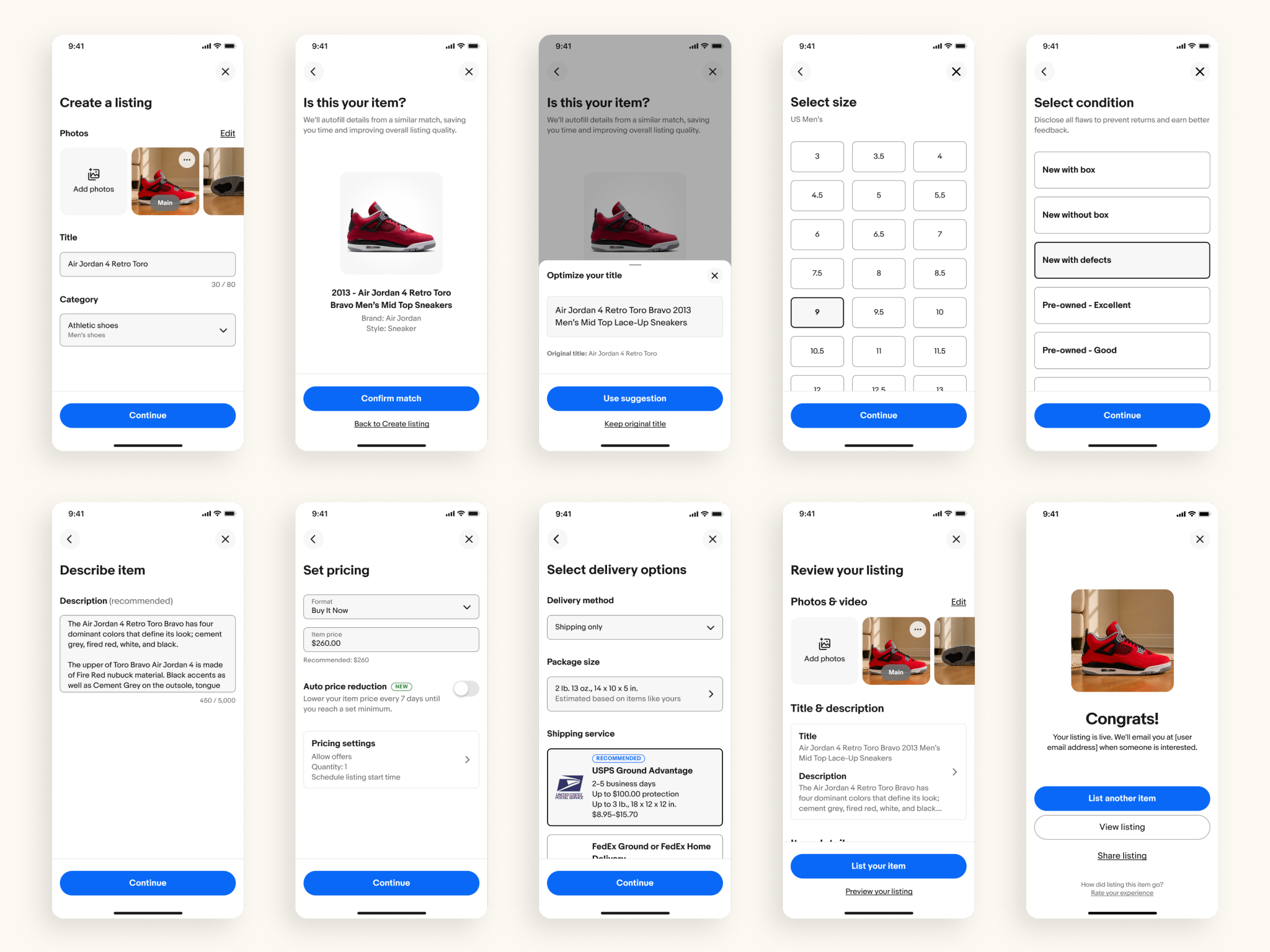
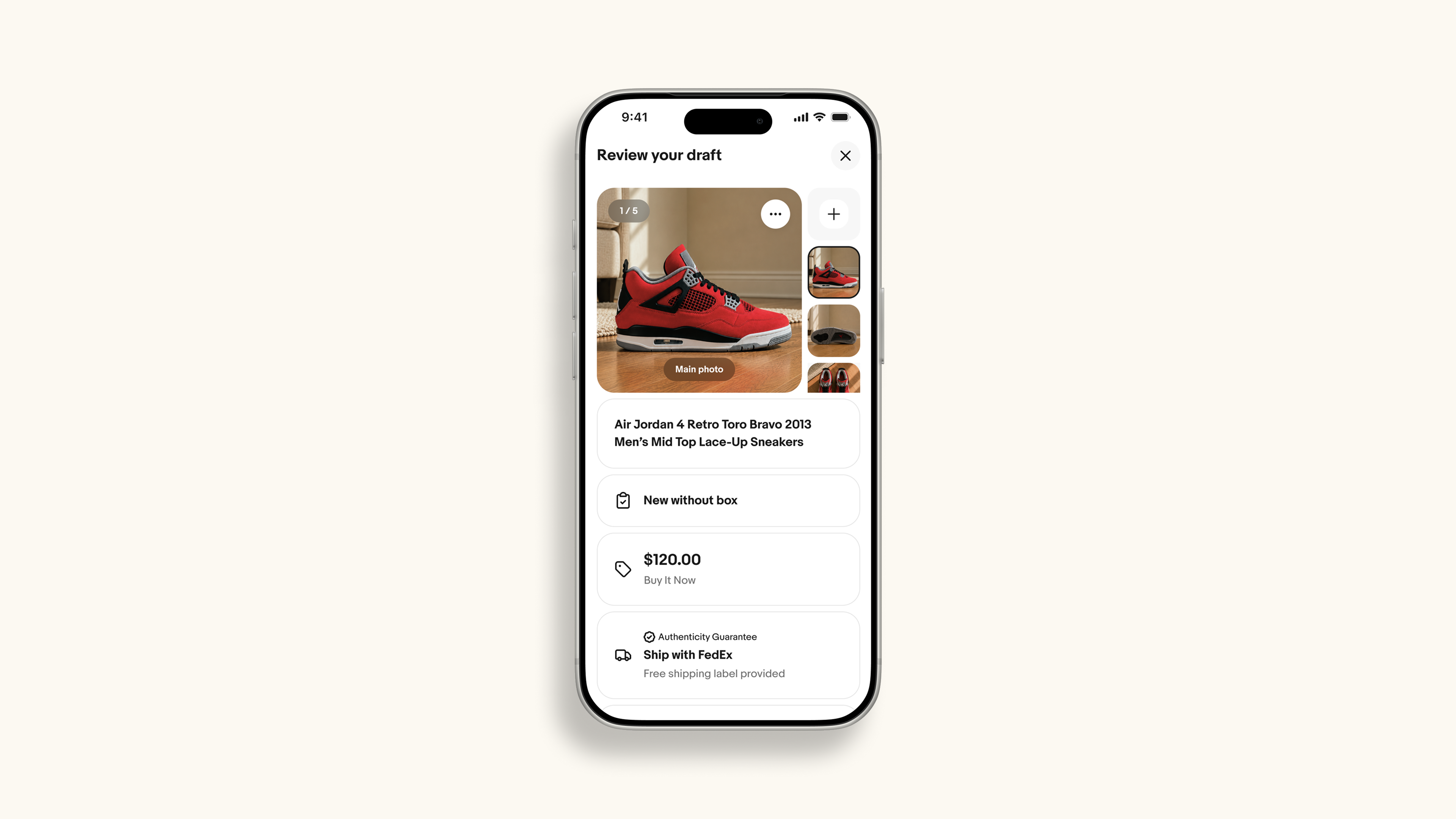
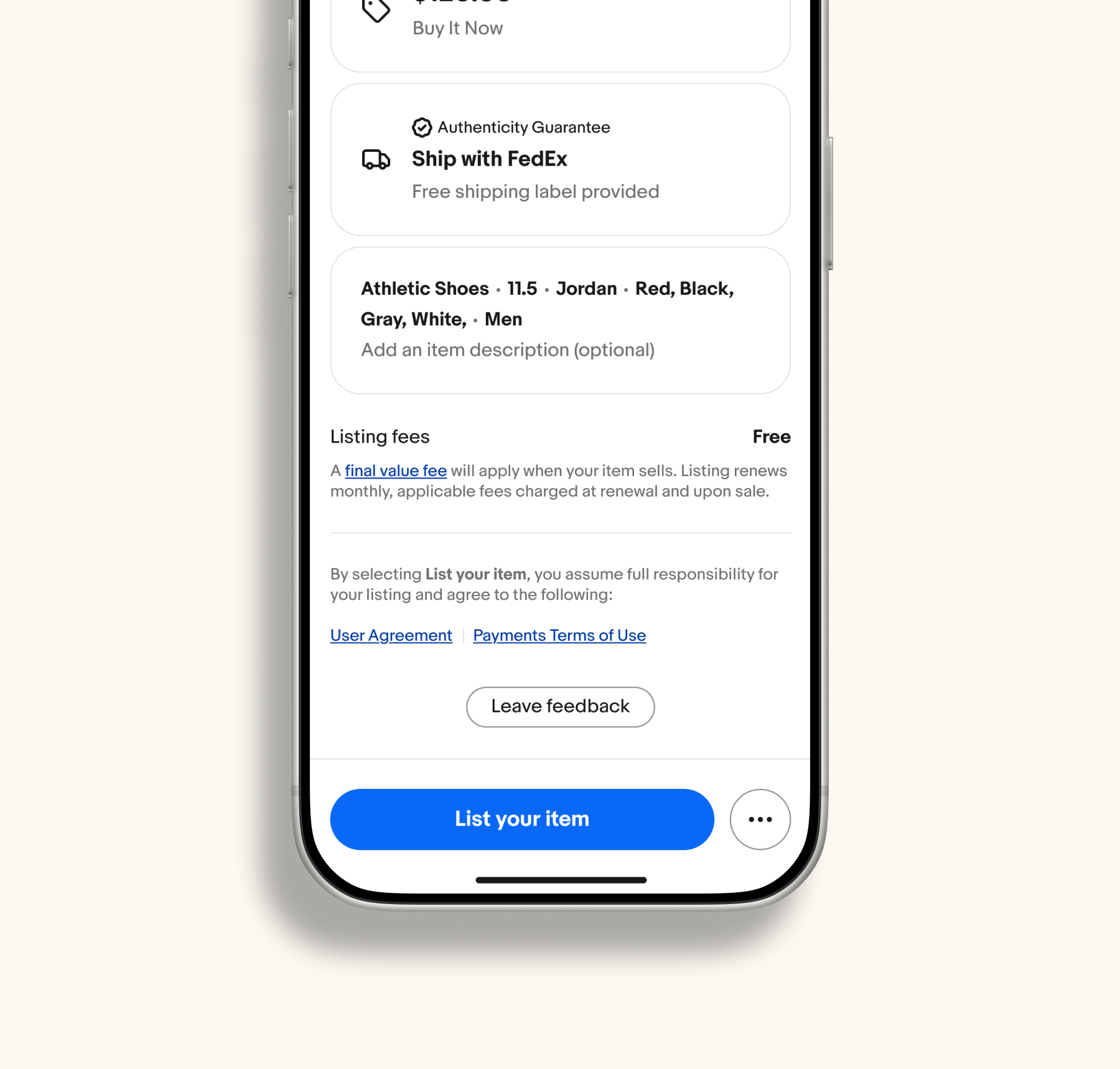
We moved toward an AI-generated summary experience to preserve momentum, reduce context switching, and match natural review behavior.
Testing showed users followed prompts, added more photos, and positive feedback emerged consistently.
So easy and love the tips for photos!
eBay SellerI'll be selling a lot more on eBay. Never knew it was this easy.
eBay SellerRather than carrying forward every feature from the existing listing experience, we simplified the journey around the needs of New and Reactivated Listers.
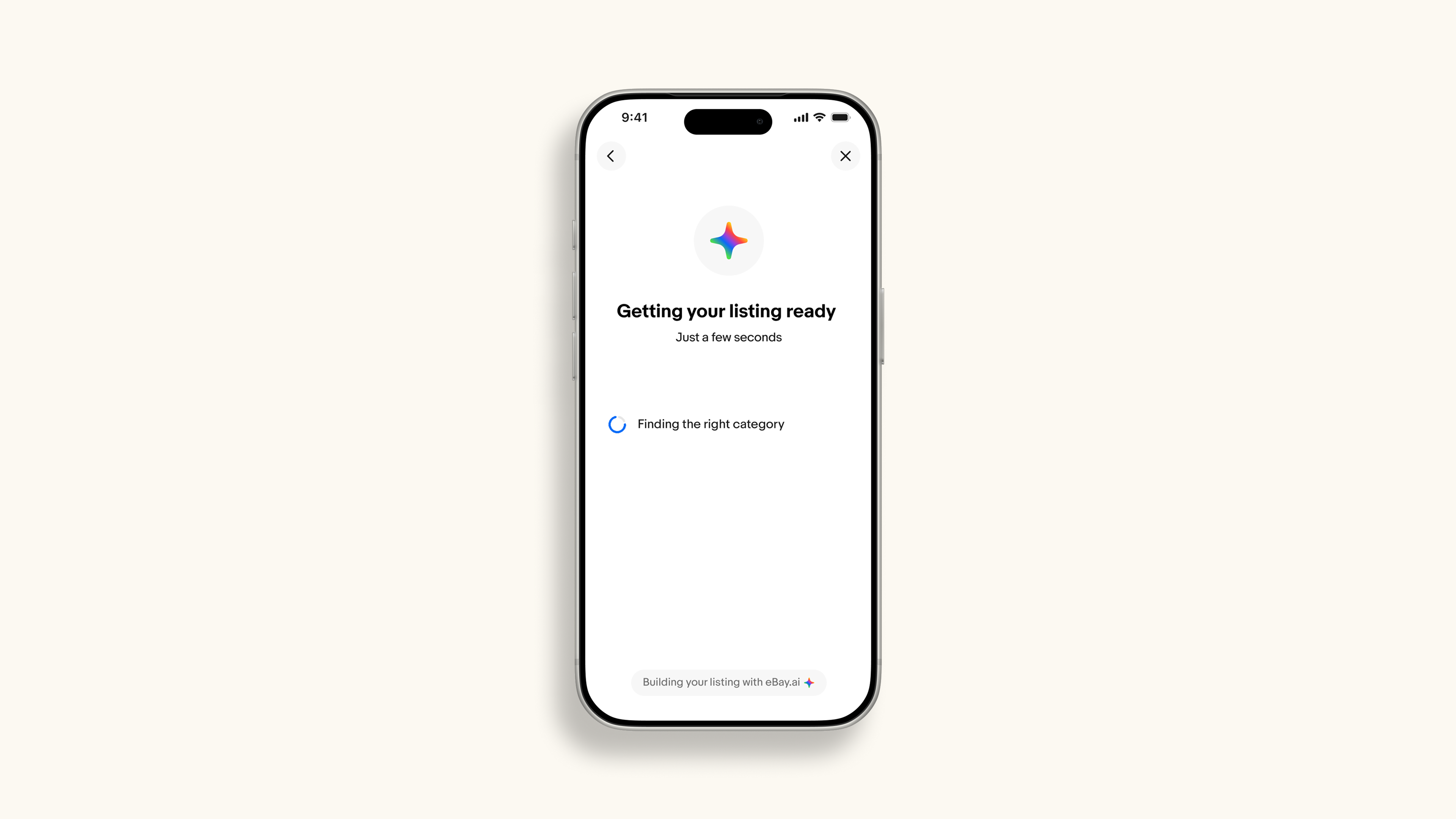
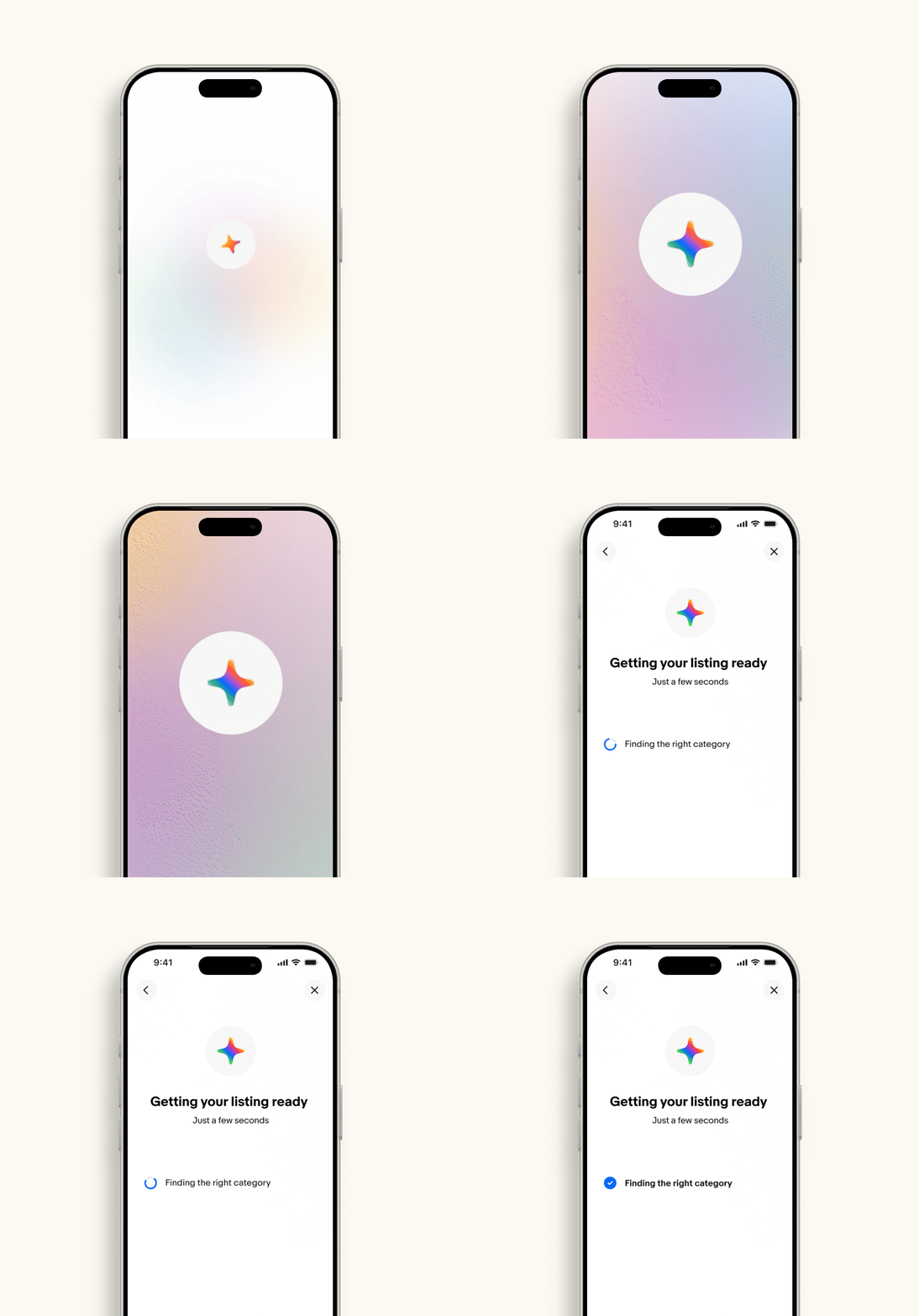
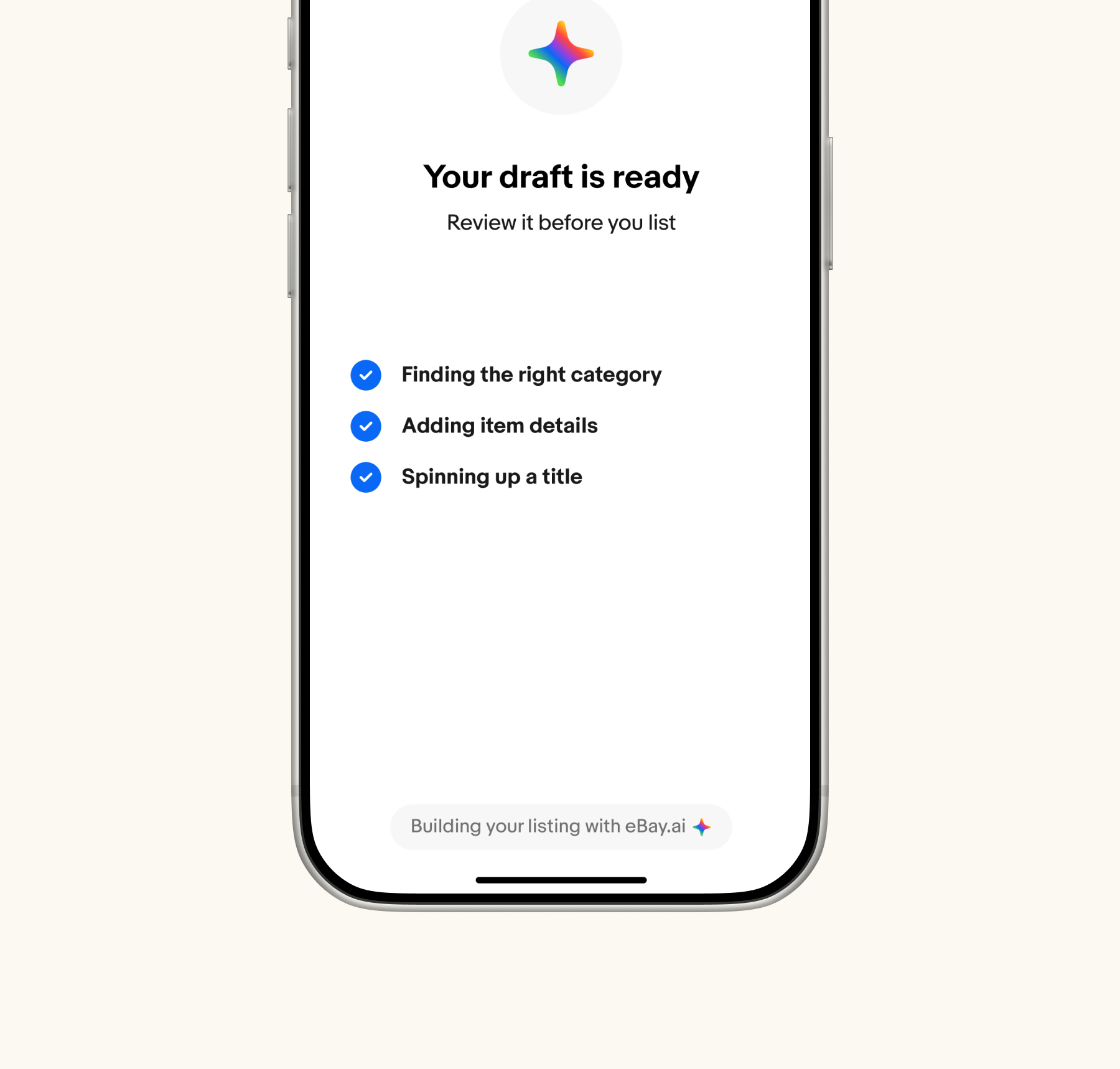
We consolidated AI disclosures into a single loading experience rather than cluttering the UI with generated content labels.
Impact
Reflection
This project reinforced my belief that great design reduces friction. The challenge wasn't making AI feel magical, it was making complexity feel invisible while building trust and confidence for users.
It also reinforced that AI should not replace people, it should amplify human goals, behaviors, and individuality.
Happy to talk through the process, tradeoffs, and what I'd do differently.