Personal Project with Claude Code
Exploring how AI can transform ideas into shipped products through rapid iteration and creative collaboration.
Project Summary
As AI continues to reshape how digital products are created, I wanted to challenge myself to move beyond designing interfaces and begin building complete experiences.
This project started as an experiment to understand how AI could accelerate product development while solving a simple everyday problem: making moments of downtime more enjoyable.
Using Claude Code as a development partner, I designed and built a collection of arcade-inspired mobile games, rapidly moving from ideas to playable experiences through continuous iteration. Along the way, the project became more than a games app, it became a hands-on exploration of how designers can collaborate with AI to prototype, build, and refine products at a pace that wasn't previously possible.
The Opportunity
Modern AI tools are fundamentally changing what's possible for designers. Rather than treating AI as a prototyping tool, I wanted to explore how it could become a true development partner by me helping transform ideas into working software through rapid iteration and continuous collaboration.
At the same time, I wanted to create something personally useful: a collection of quick, approachable games people could enjoy during everyday moments of downtime whether waiting in line, grabbing coffee, or simply looking for a fun distraction.
Building with Claude Code
Instead of spending weeks on a prototype, I could move from idea to working software in a single sitting. I am to explore concepts, test gameplay, and refine mechanics until they feel polished. Rather than stopping at mockups, I iterated on difficulty, progression, streaks, achievements, menus, and UI consistency through continuous feedback.
AI delivers its greatest value through collaboration, not delegation.
Creating Engaging Gameplay
Engagement isn't only about mechanics, it's about giving players control over their experience and a reason to keep coming back.
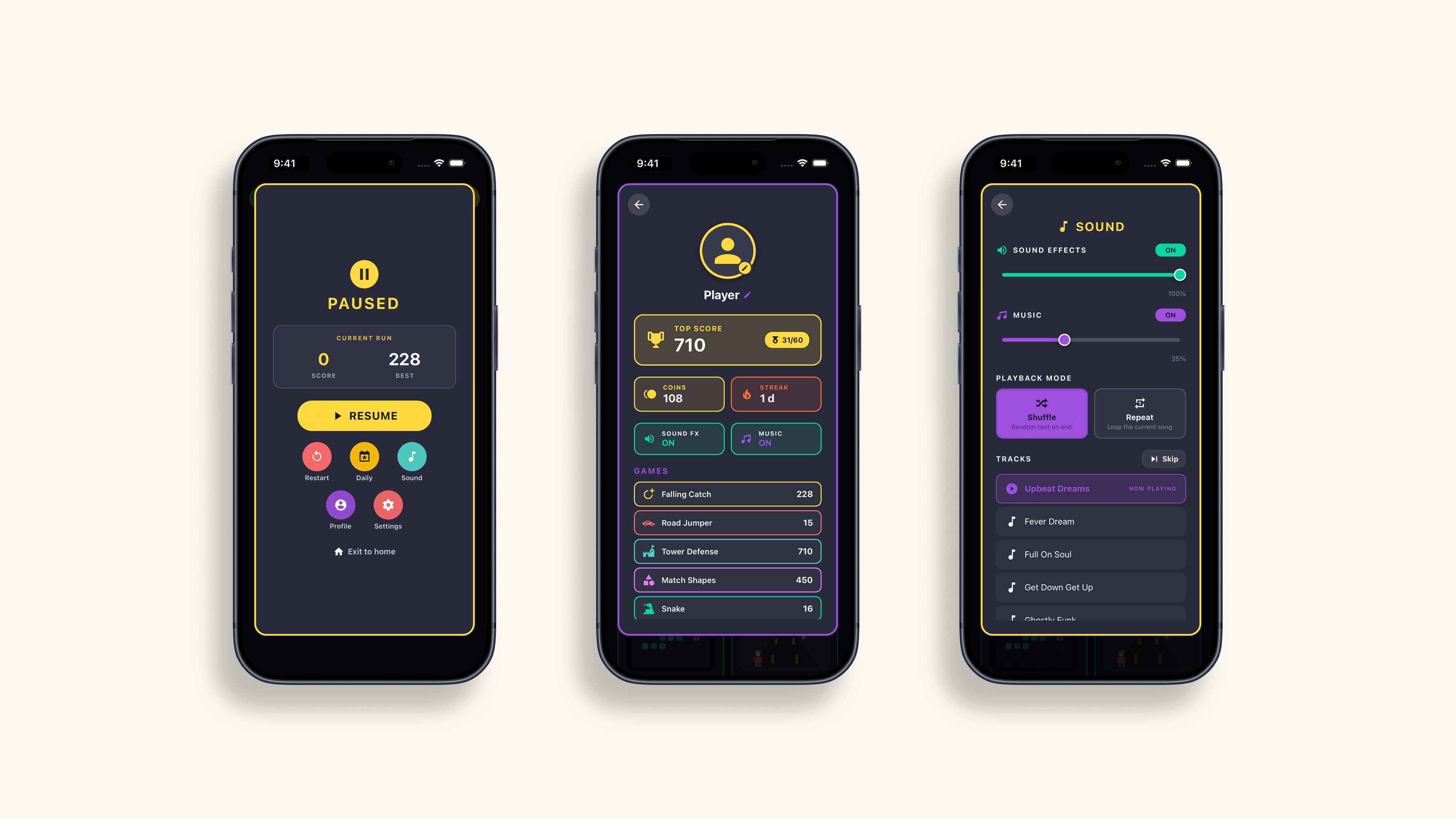
A pause menu, available from any game, lets players jump straight to their profile to review achievements turning quiet progress into something they can see and chase.
From the same menu, players can fine-tune in-game settings like sound and music to match their taste, so every session feels like their own.
Game Gallery
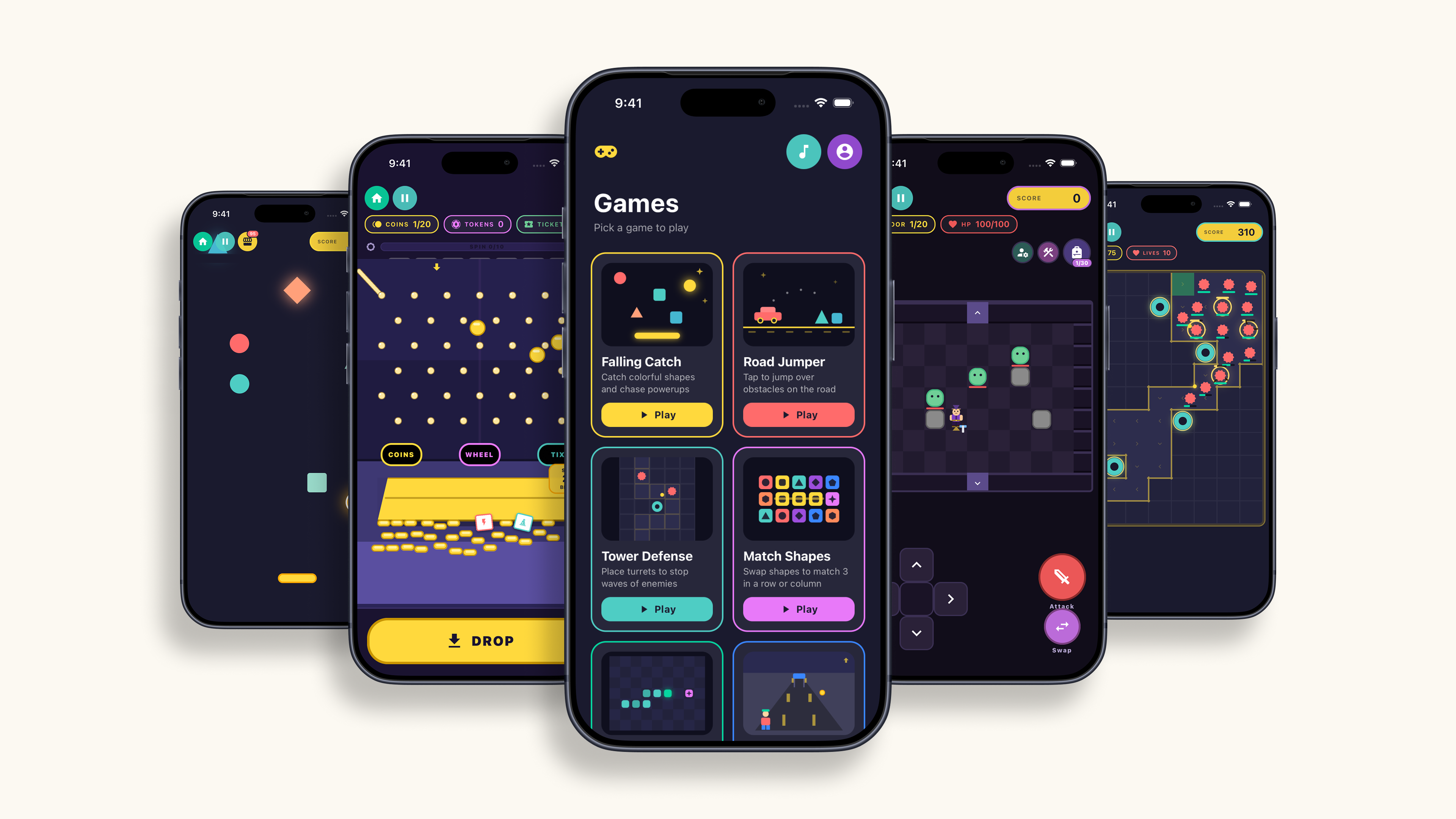
The app currently includes ten arcade-inspired games spanning a variety of mechanics and play styles.
Catch falling shapes to build your score while avoiding mistakes.
Jump over obstacles and survive as long as possible.
Control lanes and prevent enemies from reaching the goal.
Match three or more shapes to clear the board and earn points.
A modern take on the arcade classic.
Swipe to dodge, jump, and duck through an endless city.
Fight enemies, mine resources, and descend through procedurally generated floors.
Drop coins strategically, complete goals, and collect all seven cards.
Destroy incoming ships and debris in a fast-paced space shooter.
Perfectly time block placements to build the tallest tower possible.
What I Learned
One of the biggest lessons from this project was that AI produces its best work through collaboration. The first solution is rarely the best one.
The real value comes from continuously refining ideas, challenging assumptions, and iterating together until the experience feels polished enough to ship.
The project also reinforced that AI doesn't replace product thinking, it amplifies it by allowing designers to explore more ideas, validate concepts faster, and focus more time on crafting better experiences.
What's Next
The long-term goal is to publish the app on the App Store and continue expanding the collection with new games, features, and progression systems. Future exploration includes:
The project will continue serving as both a playground for experimentation and a way to explore how AI can reshape the future of product development.
Reflection
This project fundamentally changed how I think about product development. AI has become another creative partner in my process allowing me to move beyond designing interfaces to building and testing complete experiences.
It reinforced that great products don't come from accepting the first solution, but from continuously iterating until the experience feels intuitive, engaging, and ready for people to enjoy.
More importantly, it showed me that the future of product design isn't just creating interfaces, it's rapidly building, testing, and refining products alongside AI.
Happy to talk through the process, tradeoffs, and what I'd do differently.